Housing Panel Defends Trust Fund, Pauses Ordinance Work
The Madison Affordable Housing Committee defended its proposed trust fund against resident skepticism and welcomed a new member Wednesday.
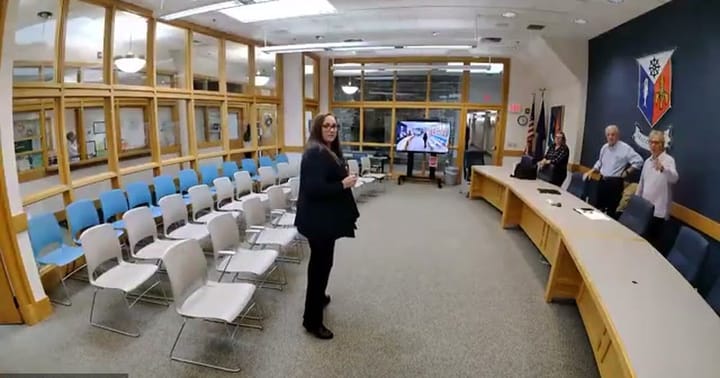
Other Committee · Meeting of October 21, 2026
MADISON — The Madison Affordable Housing Committee defended its proposed trust fund against resident skepticism and welcomed a new member Wednesday. Resident Jeff Dallas questioned why the town needed "a separate fund to be managed" rather than funding projects as line items; the committee's chair countered that only a dedicated fund can accept outside donations and negotiate with developers under Connecticut's 8-30g statute, which lets builders bypass local zoning if 25 percent of units are affordable. Members said 92 percent of Madison's housing is single-family.
The committee approved its September 16 minutes unanimously but reported no action on the trust fund ordinance, saying the town is holding off on "controversial topics" until after the municipal election. Liaison Jen Gordon said a town survey was delayed for the same reason.
In the full story:
- Who Was There
- Organizations And Documents Referenced
- The complete report — 1,916 words
Source: the Other Committee meeting of October 21, 2026, reported from the official video recording and transcript.
Checked against the record: before publication this article was automatically compared with the meeting transcript.
The Full Article
Opening, Roll Call and a New Member
Wednesday's meeting of the Madison Affordable Housing Committee opened with technical difficulties over Zoom access, a recurring issue the chair joked happens "every meeting ever hosted in that room." After the Pledge of Allegiance, the committee's first order of business was welcoming its newest member, referred to in the meeting as Kara (the transcript also renders the name "Cara"), who recently moved to North Madison from Westbrook with her partner. The chair asked two sitting members, Mark and Heather, to introduce themselves for the new member's benefit. Mark described himself as a local realtor who has "made a career out of discussing housing." Heather identified herself as the Assistant Director for the Town of Madison's Beach, Recreation and Senior Department, whose role includes gauging the impact of affordable housing on the town's senior population.
The chair also described the committee's non-voting liaisons: Molly Fahey, a coordinator of social services who works with residents under 65, serving as counterpart to Heather's work with residents 65 and older; and Town Planner Erin Mannix, described as the committee's connection to regional and state housing policy, who was not confirmed present for the full meeting. The chair noted the committee also receives input from the South Central Regional Council of Governments, referred to in the audio as "Schrock" or "Scrogg," which the chair said will become more important as the state begins allocating required housing-unit numbers among towns. Board of Selectmen liaison Jen Gordon, participating by phone while driving, reminded members she is a non-voting liaison whose role is to relay information between the committee and the Board of Selectmen. Member Richard, the second-newest member, joined partway through by Zoom after initial connection problems.
Approval of September Minutes
The committee's only recorded vote of the meeting came early: a motion to approve the minutes of the September 16 meeting. The motion passed by voice vote with no recorded opposition. No member names were attached to the motion or second in the audio.
Public Comment: Does Madison Need a Separate Trust Fund?
The meeting's most substantive exchange came during public comment, when Jeff Dallas, who said he lives on Markham Place, challenged the committee's rationale for a dedicated Affordable Housing Trust Fund. "I understand the purpose of the fund, but to me it's not directed at all. It's just a way of accumulating money at one time," Dallas said, arguing the town's existing 25 percent capital surplus, up from about 12 percent of the town budget over a 12-year period, could instead fund affordable housing projects as individual line items brought to voters.
The committee's chair responded that a segregated fund allows the town to accept restricted donations from foundations, the state and the federal government that could not otherwise be earmarked for affordable housing, and that the fund structure survives changes in elected leadership because it is "perpetual." The chair said the committee spent roughly a year and a half to two years studying alternative structures, including the kind of line-item approach Dallas proposed, before settling on the trust fund model, and that public hearings remain open for further input.
The exchange turned to the state's role. The chair argued that regardless of whether members or residents support it, "the state law that just passed last fall is going to require towns throughout the state to be building more affordable housing." Dallas disputed that characterization, saying "that has not been law," prompting the chair to describe a 12 percent state housing goal tied to a law referenced in the meeting as House Bill 8002, under which the chair said regional councils of government, including SCRCOG, will begin negotiating unit allocations among towns over the next several years. The chair separately cited Connecticut's existing 8-30g statute, under which a developer can build a project of any size, including multifamily buildings, over town objection as long as 25 percent of the units are deed-restricted as affordable: "As long as I can give you 25 percent of the units in that building as affordable, you can't stop me," the chair said, framing the trust fund as a way for the town to negotiate terms with developers rather than simply absorb projects under that statute. Dallas maintained his preference for case-by-case appropriations but acknowledged "there are different ways of doing it."
A planning and zoning commissioner in attendance, not otherwise named in the transcript, noted that regulations already in the town's zoning code address some repurposing projects, such as converting former single-use properties into multiple housing units, and that those rules are still being developed to meet state requirements.
Old Business: Building Bridges With Other Town Committees
Members reported on two intermunicipal meetings held since the committee's last session. The first, a "land use oriented town committee" meeting at the Surf Club on September 24, drew roughly 25 participants from committees including Economic Development, Tree, Pedestrian and Bikeway, and Facilities. The chair and member Richard both attended; member Jen Gordon attended briefly before leaving for a school event. Participants, including Facilities Committee Chairman David Kadamis, agreed that town committees with overlapping interests in land use should coordinate more consistently rather than working in isolation. The chair said a neighbor, identified as Andrew Wood, separately approached him afterward to suggest the committees "should talk."
Members discussed whether to designate liaisons to roughly five or six related committees or to simply flag meetings as they arise, given the added time commitment for volunteer members who already juggle differing schedules. No formal decision was made; the chair proposed compiling a list of related committees and their meeting schedules to bring back to the group, and members agreed to begin sharing the committee's agenda and minutes with the chairs of other town boards as a low-effort step toward better communication. "That's a nice soft touch, too, to keep the dialogue open," one member said in response to the proposal. The group agreed the quarterly coordination meetings discussed at the Surf Club session should continue rather than be a one-time event, a point member Richard confirmed by phone: one of the action items from that meeting "was that we would all meet on a quarterly basis."
Old Business: Planning and Zoning Rewrite and a Possible Moratorium
The second intermunicipal session was a Planning and Zoning Commission public input meeting held about a week after the Surf Club gathering, which the chair did not personally attend; member Mark reported on it instead. Mark said consultants hired by the town have consolidated and clarified existing zoning regulations, a process he described as complete, making related provisions that had previously been scattered across different sections of the code easier to locate. He said most of the discussion at the input session concerned next steps and differing understandings among attendees about what changes were already underway versus still planned.
Mark said one idea drew general support at the session: a temporary moratorium on new development applications once the regulation rewrite is finished, intended to prevent developers from rushing projects through under the old rules before new ones take effect. "I think it was towards the end of the meeting, and I think there was a general agreement that that was a good idea," Mark said, while noting "interested parties who don't like that idea" were also present. Member Richard, participating by phone, agreed with the concept, saying it would help "control" developers who might otherwise "leverage" the transition period. No timeline for the regulation rewrite or the moratorium was given; when asked directly how long the process might take, Mark said he did not know, calling it "a logical thing to say, but it may be practically impossible" to predict. Members said they understood further public sessions on the rewrite are planned but had no confirmed schedule.
Affordable Housing Trust Fund Ordinance: On Hold Until After the Election
The chair reported no substantive progress on the Affordable Housing Trust Fund ordinance since the committee's last meeting, attributing the pause to a scheduling conflict and the approaching municipal election. A planned meeting with a town official referred to in the audio as Peggy Lyons was postponed after a hurricane warning disrupted town priorities the weekend after the committee's September 16 meeting. In a subsequent conversation, the chair said, both agreed that "with the elections coming up now, it's less than two weeks," most Connecticut towns avoid advancing controversial items in the final weeks before a vote, a pattern the chair said he has also heard described in other towns regarding major development projects. The chair said he plans to revisit the ordinance with Lyons after the election.
Board of Selectmen liaison Jen Gordon said the same logic applied to an unrelated town initiative, an Academy School survey that officials chose to hold back from release until after the election to avoid the appearance of political timing or voter fatigue. "Some of these big items really do deserve their own attention and not putting them in line with the election, I think, helps us to do that," Gordon said.
New Business and Adjournment
No new business items were raised. Member Richard said he had nothing to add; new member Kara said she had no items beyond her developing familiarity with ongoing discussions. The meeting adjourned without objection.
WHO WAS THERE
Committee chair, presiding over the meeting; full name not stated in the available transcript. Mark, committee member, realtor; full name not stated in the available transcript. Heather, committee member, Assistant Director, Beach, Recreation and Senior Department; full name not stated. Richard, committee member; joined partway through via Zoom; full name not stated. Kara (also rendered "Cara" in the transcript), newly welcomed committee member; full name not stated. Jen Gordon, Board of Selectmen member, non-voting liaison to the committee; participated remotely. Erin Mannix, Town Planner, non-voting liaison; attendance for the full meeting unconfirmed. Molly Fahey, town social services coordinator, non-voting liaison; role described but attendance not explicitly confirmed. Jeff Dallas, Madison resident (said to live on Markham Place); public comment on the trust fund. Michael Miller, virtual attendee; did not speak or raise a comment. Tony, virtual attendee (no surname given); did not speak or raise a comment.
Referenced but not present at this meeting: Carol Snow, Chairman, Planning and Zoning Commission; Peggy Lyons, town official discussing the trust fund ordinance with the chair; David Kadamis, Chairman, Facilities Committee; Andrew Wood, Madison resident referenced regarding interagency cooperation.
ORGANIZATIONS AND DOCUMENTS REFERENCED
South Central Regional Council of Governments (rendered "Schrock"/"Scrogg" in the audio) — regional body expected to coordinate state-mandated affordable housing unit allocations among towns. Connecticut General Statutes Section 8-30g (rendered "A30G") — state affordable-housing appeals statute cited as allowing developers to override local zoning when 25 percent of a project's units are affordable; central to the public comment debate over the trust fund's purpose. House Bill 8002 — state legislation referenced by the chair as driving new municipal affordable-housing obligations. Madison Planning and Zoning Commission — cited for its ongoing multiyear rewrite of town zoning regulations and for the September public input session on that rewrite. Land Use Oriented Town Committee meeting, Surf Club, September 24, 2026 — interagency gathering cited in the old-business discussion of committee coordination. Minutes of the committee's September 16, 2026 meeting — approved unanimously at this meeting. Academy School survey — separate town initiative cited by Jen Gordon as similarly delayed until after the municipal election.
Share this story
Know someone in Madison who follows town government? Share Townbrief Madison: they can sign up free.