Housing panel preps for trust fund hearing
Madison's Affordable Housing Committee prepared residents for a pending Board of Selectmen vote on a proposed housing trust fund.
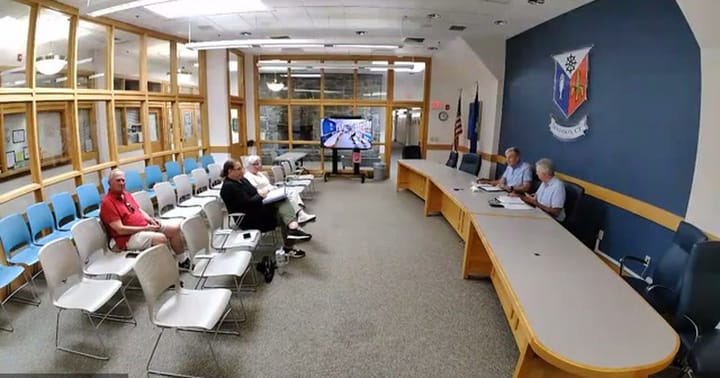
Other Committee · Meeting of August 19, 2026
Madison's Affordable Housing Committee prepared residents for a pending Board of Selectmen vote on a proposed housing trust fund. Committee member Mark said outside funding worth up to $8 million could require the town to cover a $2 million match, but stressed "there's no plan right now for the town to give us any money." Resident Jim Schmaltz pushed back on the broader effort, saying "we should just be subsidizing rent more for people, not changing zoning and building you know buildings." The panel also flagged a 16-unit Mill Road cluster housing development heading to a Planning and Zoning Commission hearing the next night, disagreeing among themselves over whether seven units would be deed-restricted as affordable. Members said the committee has shrunk from seven to three and is seeking politically balanced new recruits, including a Republican.
In the full story:
- Who Was There
- Organizations And Documents Referenced
- The complete report — 2,256 words
Source: the Other Committee meeting of August 19, 2026, reported from the official video recording and transcript.
Checked against the record: before publication this article was automatically compared with the meeting transcript.
The Full Article
Call to Order and Minutes
The meeting opened with roughly ten minutes of technical difficulty as the committee's chair and staff worked to connect members by Zoom and phone. One member, referred to throughout only as Richard, could not be heard for most of the meeting despite repeated attempts; the chair apologized to him directly near the close of the meeting, saying, "I'm very, very sorry that hopefully you heard all this." A member referred to in the recording alternately as "Erin" and "Aaron" had notified the chair in advance that she would not be able to attend. The committee recited the Pledge of Allegiance, which a public commenter, Jim Schmaltz, noted was unusual for the group; the chair explained he had been told, as the panel's newer chair, that reciting the pledge was appropriate practice. Minutes from the previous meeting were approved on a voice vote with no stated opposition.
Public Comment: Affordable Housing Philosophy
Background and stakes: Public comment opened on the meeting's dominant theme, the town's draft affordable housing trust fund, which the committee has been developing as Connecticut moves toward requiring every municipality to adopt an affordable housing plan.
The question before the body: whether, and how, the committee should respond to public skepticism about using town resources or zoning changes to support affordable housing, ahead of a public informational meeting the committee said is scheduled for the following Monday at 6 p.m.
Substantive content and deliberation: Jim Schmaltz argued the state's population has stayed essentially flat, questioning the premise that a housing affordability crisis exists at all, and suggested the real issue is pricing, not supply. He said direct rent subsidies, not zoning changes or new construction, would be a more honest response. "If we're having to change zoning laws and change things in town to do this, but there really isn't, you know, a physical need, it's more of a pricing" problem, Schmaltz said, adding later, "We should just be subsidizing rent more for people, not changing zoning and building you know buildings."
The chair pushed back, telling Schmaltz that even a small number of new affordable units "allows a possibility of a small number of people to be able to afford housing here" without materially affecting the broader market. A second public commenter who identified himself as Ralph Singlaton asked a clarifying question about the source of pressure on towns, prompting the chair to explain that the federal government has pressured states, which in turn have pressured all 167 Connecticut municipalities to produce affordable housing plans. "So why wouldn't we want to be involved in helping form how it happens here in Madison?" the chair said, framing the committee's work as local control over an outcome Schmaltz himself argued was already a legal inevitability.
Outcome: No vote was taken; the exchange closed when the chair asked Schmaltz, who had raised similar points at a prior meeting, to make a closing comment so the meeting could move on.
Old Business: Affordable Housing Trust Fund
Background and stakes: The committee has drafted a proposed affordable housing trust fund that the Board of Selectmen is expected to take up for approval following a public informational meeting the committee said is set for the Monday after this meeting, at 6 p.m. in the same room.
The question before the body: what the trust fund would and would not do, and how to respond to criticism, ahead of the selectmen's vote.
Substantive content: The chair described the trust fund as a vehicle, not itself a funding source, intended to hold money from several channels: federal grants, state funds, charitable and foundation donations, private donations of money or land, and limited town contributions. He said the fund was deliberately drafted broadly, drawing on examples from other towns, specifically so that donors and grantors could designate funds for affordable housing with assurance the money would be used only for that purpose. Any town money or in-kind donation (such as land) worth $250,000 or more would require Board of Selectmen approval. Committee member Mark added that a future scenario could involve an outside funding source covering roughly eighty percent of a project's cost, which could present the town with a decision about whether to contribute the remaining share. He used a hypothetical of an $8 million outside contribution requiring a $2 million town match as an illustration, stressing there is currently no town plan to contribute any money to the fund.
The deliberation sharpened when Schmaltz, participating again from the public, asked whether the Board of Selectmen could move money into the trust fund repeatedly, year after year, just under the $250,000 threshold, without a public vote. Mark and the chair agreed that scenario was technically possible but said it would still require the item to appear on a public Board of Selectmen agenda, even if a formal public hearing is only statutorily required at $250,000 or above. The chair defended the town's representative form of government: "We do not vote on every single thing that happens... we empower our Board of Selectmen to make decisions on our behalf that they believe are in the best interest of this community." Schmaltz's response, that residents dissatisfied with selectmen's spending decisions could "fire the rascals" at the ballot box, drew agreement from the chair.
Procedural steps and outcome: No formal action was taken on the trust fund by this committee; the substantive decision rests with the Board of Selectmen after the public informational meeting. The chair encouraged attendance, saying wider turnout would ensure "we get a cross-section of the community and not just people who are writing letters to the editor or appearing on Facebook."
Implications and what is next: The Board of Selectmen's anticipated vote, following the informational meeting, will determine whether Madison establishes the trust fund structure described above. The committee pointed to state pressure on all Connecticut towns to adopt affordable housing plans as the underlying reason the fund exists as an agenda item at all.
New Business: Mill Road Development
Background and stakes: The chair said he learned informally, in conversation with Mark at a Madison Historical Society event, that a residential development is working its way through the town's land-use process on Mill Road, near its intersection with River Road. The project was scheduled for a Planning and Zoning Commission hearing the night after this meeting, at 7 p.m. in the same municipal room.
The question before the body: whether the committee should have been informed of the project earlier, and what role, if any, it should play in future reviews of developments with an affordable housing component.
Substantive content: Members described the project as a 16-unit cluster housing development with an internal access road. Accounts of how many units would be deed-restricted as affordable diverged: one member said the committee's understanding was that seven of the sixteen units would be affordable, while another member, identified in the discussion as Michael, said his understanding was that the cluster development "doesn't include affordable" units at all. A member referenced an apparent statutory basis for the project's density, saying developers were "using a 30 G," an apparent reference to Connecticut's affordable-housing land-use statute commonly cited as Section 8-30g, though the transcript audio did not clearly spell out the citation. Members also cited an unconfirmed estimate from a real estate broker that units could be priced between $1.5 million and $1.7 million, which, if accurate, a member suggested might be "optimistic." One member noted he and his spouse live on, or near, the street where the development is planned, and said a neighboring farm, owned for a century by a family identified as the Lewis family, was also expected to go up for sale nearby.
The deliberation turned on process more than substance. "Why did we have to hear about this kind of third hand?" one member asked, prompting broader discussion of whether the committee should insist on earlier involvement in any project with an affordable housing component. The chair agreed in principle but noted the committee currently has no formal role unless the trust fund is approved, saying "we are early enough in this process right now" to watch rather than act. A reference was made to a separate town appearance review body that had reviewed renderings of the project the previous night but, according to one member, "didn't talk about anything in terms of" the project's affordable housing content.
Procedural steps and outcome: No vote or formal committee position was taken. Members said they intended to attend the Planning and Zoning Commission hearing individually to learn more, and suggested the committee should eventually discuss directly with the project's developers why more units were not designated affordable.
Implications and what is next: The Planning and Zoning Commission hearing the following night is the next decision point for the Mill Road project; the Affordable Housing Committee has no standing role in that review process under current town rules.
Committee Membership and Community Outreach
Background and stakes: The committee said its membership has fallen from seven to three, attributing the decline to members moving out of town or simply becoming unavailable.
The question before the body: how to recruit new members, including a stated goal of achieving better political balance.
Substantive content: Members said the current roster includes two Democrats and one independent, with no Republican representation, and said that imbalance was a "glaring weakness." They proposed contacting the town's Democratic and Republican town committees for candidate names, and reaching out to groups such as the Chamber of Commerce, tying any recruitment pitch to the trust fund proposal if it moves forward. One member noted a resident had previously reached out through the committee's general email inbox asking about the application process and was told to go ahead and apply; members agreed to follow up and encourage that person to complete an application. Public commenter Ralph Singlaton, who said he was invited to a meeting he once attended after reaching out following an earlier town meeting on affordable housing roughly two years prior, described being connected with a person identified only as Al Chen before being invited to join a committee; it was not clear from the recording whether this referred to the Affordable Housing Committee or another town body.
Procedural steps and outcome: No formal recruitment plan was voted on. The committee treated the discussion as informal planning.
Implications and what is next: Continued vacancies could affect the committee's capacity to review projects like the Mill Road development going forward; recruitment efforts were described as likely to intensify if the trust fund is approved.
Media Coverage
Background and stakes: The committee credited recent newspaper coverage with raising public awareness of the trust fund proposal.
Substantive content: The chair said reporter Aaron Rubin, of the local newspaper identified as "the Source," interviewed him and fellow member Mark about the trust fund and produced what the chair called a fair, balanced article. Several letters to the editor followed, including one the chair said he submitted himself. Rubin appeared to be present for this meeting; the chair addressed him directly near the close, asking if he had anything to add, and Rubin said he did not.
Implications and what is next: The chair said he expected continued newspaper interest, particularly around the trust fund, as the Board of Selectmen's decision approaches.
WHO WAS THERE
Committee chair, Madison Affordable Housing Committee — name not stated in the recording; ran the meeting, presented the trust fund rationale.
Mark, committee member — discussed trust fund funding scenarios and the Mill Road project.
Richard, committee member — present by phone/Zoom but inaudible for nearly the entire meeting due to technical issues.
Member referred to as "Erin"/"Aaron" (she), committee member — notified the chair in advance she would not attend; not present.
Jim Schmaltz, public commenter — questioned the need for affordable housing spending and zoning changes.
Ralph Singlaton, public commenter — asked about state and federal pressure on towns to plan for affordable housing; described past interest in joining a town committee.
Aaron Rubin, reporter for "the Source" — covered the trust fund proposal; appeared present at the meeting.
Michael (Michael Miller per early roll of Zoom attendees), audience/commenter — offered a view that the Mill Road project does not include affordable units; had Zoom audio issues.
J.O. Smalls, Zoom audience participant — identified only by name at the start of the meeting; did not speak substantively.
Peggy — mentioned briefly near the close of the meeting; role not stated in the recording.
ORGANIZATIONS AND DOCUMENTS REFERENCED
Board of Selectmen — the body expected to vote on approving the affordable housing trust fund following a public informational meeting.
Planning and Zoning Commission — scheduled to hold a hearing the night after this meeting on the Mill Road cluster housing development.
"the Source" (local newspaper) — published an article by reporter Aaron Rubin on the trust fund, and subsequent letters to the editor.
Connecticut General Statutes, apparent reference to Section 8-30g — cited in garbled form ("30 G") in discussion of the legal basis for the Mill Road project's density.
Madison Historical Society — site of the informal conversation where the chair first learned of the Mill Road project.
Chamber of Commerce; Democratic and Republican town committees — identified as potential outreach partners for recruiting new Affordable Housing Committee members.
Lewis family — longtime owners of farmland near the Mill Road project site, referenced as potential future sellers.
Share this story
Know someone in Madison who follows town government? Share Townbrief Madison: they can sign up free.